Thinking about a move to the Phoenix area and wondering why so many people choose Goodyear? You want room to grow, newer homes, easy freeway access, and year-round outdoor fun without giving up everyday convenience. This guide walks you through what makes Goodyear stand out, what typical homes look like, and how to relocate smoothly from out of state. You will also get a simple, step-by-step plan you can follow. Let’s dive in.
Why people choose Goodyear
Goodyear sits in the fast-growing West Valley of the Phoenix metro. The 2020 Census counted about 95,000 residents, and growth has continued as new communities and job centers expand in the area. Many buyers come for newer housing, well-planned neighborhoods, and access to major freeways that make regional travel straightforward.
Easy regional access via I-10 and 303
You can reach central Phoenix and Phoenix Sky Harbor International Airport using Interstate 10. Loop 303 gives you efficient north–south and beltway access around the West Valley. Commute times vary by neighborhood and destination, but many residents report ranges around 25 to 45 minutes to central employment hubs, with shorter drives to West Valley job centers.
Road projects evolve, so check current construction and traffic patterns as you plan your day. Many buyers choose neighborhoods based on preferred freeway access, proximity to work, or how often they need to reach the airport.
Parks, trails, and outdoor fun
If you love the desert, Goodyear makes it easy to get outside. Estrella Mountain Regional Park offers miles of desert trails, wide views, and space for family outings. You are also within a reasonable drive of other West Valley parks like the White Tank Mountains.
Inside the city, you will find neighborhood parks, sports fields, dog parks, and paved multi-use paths. The Goodyear Ballpark hosts spring training and community events, which adds to the area’s active, social feel. Plan for heat in summer, choose early morning or evening outings, and follow posted advisories on local trails.
Master-planned living and lifestyle
Master-planned communities are a hallmark of Goodyear. Many bundle amenities such as clubhouses, pools, trails, fitness centers, and sometimes golf. You get consistent neighborhood design and shared spaces that make it easy to plug into community life.
There is also a strong presence of active adult communities for 55-plus buyers who want on-site amenities and organized activities. If you are comparing neighborhoods, review HOA fees, what they cover, and any rules that may affect your lifestyle, pets, landscaping, or rental plans.
Schools, healthcare, and shopping
Multiple school districts serve Goodyear, and assignments depend on your exact address. If schools matter in your search, verify current boundaries and review state report cards for specific campuses. The area is served by the region’s hospital systems and specialty providers, with urgent care and clinics nearby.
For shopping and services, you will find major grocery chains, retail centers, and local dining. Many residents also use the broader Phoenix area for specialty shopping, entertainment, and events.
What homes look like in Goodyear
Goodyear’s housing skews newer, with a strong mix of single-family homes in planned communities. You will also see townhomes and attached options in some areas, plus a range of homes in active adult neighborhoods.
Common property types
- Single-family detached homes on medium to larger lots in newer subdivisions.
- Attached homes and townhomes in select neighborhoods and mixed-use areas.
- Active adult homes with villas, paired homes, and detached styles that appeal to downsizers.
- A healthy mix of new construction and resale, often within large master plans.
Architecture and features you will see
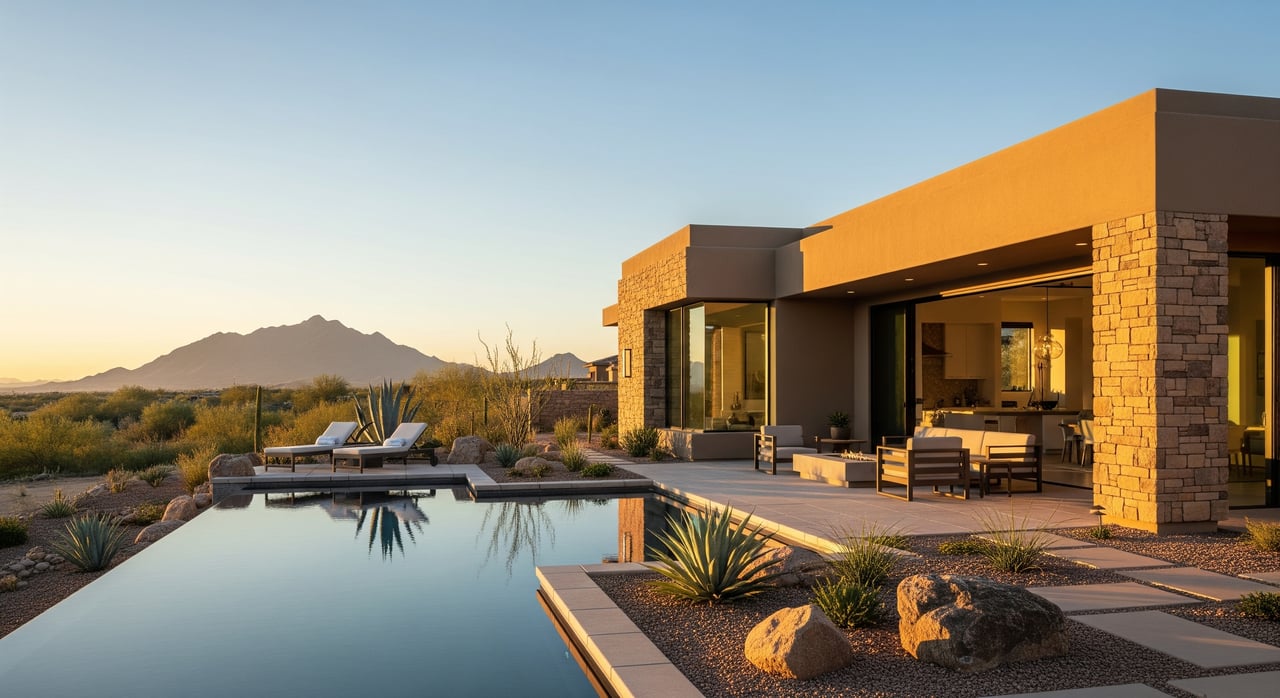
Expect stucco exteriors in earth tones with clay or concrete tile roofs. Single-story floor plans are common and popular for ease of living, and many neighborhoods also offer two-story options. Outdoor living matters here, so covered patios, desert-friendly yards, and options such as pools or outdoor kitchens show up often.
Many newer builds highlight energy-efficient HVAC and improved insulation compared to older stock. You can also explore solar options and shade features to help manage cooling costs.
Pricing and value drivers
Prices vary widely by neighborhood, age of the home, lot size, and community amenities. New builds and amenity-rich golf or club communities tend to list at a premium. For current median prices and days on market, rely on local MLS data and county assessor records so your decisions are based on up-to-date numbers.
How to relocate from out of state
Moving from out of state can be smooth when you have a plan. Here is a practical roadmap built for remote buyers.
1) Plan your finances and research (1–3 months out)
- Get pre-approved with a lender that supports remote documentation. This clarifies your budget and strengthens offers.
- List your priorities: commute needs, HOA amenities, lot size, school district boundaries, and access to parks or trails.
- Review community maps, HOA summaries, and neighborhood forums to narrow your list.
2) House-hunt remotely with confidence
- Use live video tours, recorded walkthroughs, and 3D tours to preview homes from anywhere.
- Ask for drone views where allowed to see lot orientation and nearby features.
- Request disclosures, HOA CC&Rs, budgets, and recent meeting minutes to understand rules and costs.
- Hire a local home inspector who can review findings with you by video and provide a photo-rich report.
3) Offer, inspection, escrow, and closing
- Write your offer with clear contingency timelines that accommodate remote inspections and financing.
- Schedule inspections for the general home, roof, HVAC, pest, and pool if present.
- Many title companies support e-sign and mail-away closings. Plan how you will receive keys and access the home on possession day.
4) Moving logistics and day-one setup
- Utilities: In many West Valley areas, electric service is provided by APS. Natural gas is commonly Southwest Gas. Water and trash are set up through the city or a local provider. Confirm providers by property address and arrange activation before move-in.
- Vehicles and IDs: Review Arizona DMV rules for deadlines to update your driver’s license and vehicle registration after you move.
- Property taxes: Maricopa County collects property taxes. Check the assessor for valuation history and due dates, and confirm whether your lender will escrow taxes.
- Schools and healthcare: If applicable, verify school assignments for your address and gather registration documents. Identify nearby primary care and specialists, and transfer records ahead of time.
5) Bilingual and cultural support
The Phoenix metro has a large Spanish-speaking population, and many agents, lenders, title companies, and inspectors offer Spanish support. Ask for bilingual staff or translated materials if that helps your family. Legal contracts are typically in English, so request translations for understanding if needed.
Simple relocation checklist
- Define your must-haves and nice-to-haves based on commute, community amenities, and lot preferences.
- Get pre-approved and confirm your remote-signing options with the lender.
- Shortlist 3–5 target neighborhoods that fit your budget and lifestyle.
- Schedule virtual tours and request full disclosure packages, HOA documents, and recent utility bills for each contender.
- Hire a local inspector and plan for remote review of findings.
- Map your timeline for offer, escrow, remote signing, and move-in, including key exchange.
- Set up utilities, confirm DMV steps for your license and registration, and update voter registration if applicable.
- Plan first-week essentials: locks, internet setup, shade or window treatments, and any pool or landscaping service.
Everyday life in Goodyear
Your daily rhythm can feel balanced here. Many neighborhoods offer walking paths, pocket parks, and community centers that make it easy to get outside. With I-10 and Loop 303 nearby, you can reach West Valley job centers quickly, then head to a trailhead or local park in the evening.
If you are coming from a denser, transit-oriented city, note that the Phoenix area is car-oriented. Plan for a personal vehicle and factor in garage or shade structures to protect your car during summer.
Your next step
If you want a local guide who can coordinate virtual tours, speak English and Spanish, and keep your move on track, reach out. You will get a clear plan, honest advice on neighborhoods and HOAs, and strong representation from search to closing. Connect with Jasmine Negrete to start a tailored Goodyear relocation plan that fits your life.
FAQs
Commute times in Goodyear: what should you expect?
- Most commuters use I-10 and Loop 303, with many drives to central Phoenix falling roughly in the 25 to 45 minute range depending on exact origin, destination, and traffic.
Outdoor recreation near Goodyear: where can you go?
- Estrella Mountain Regional Park is nearby for hiking and biking, with additional trails in regional parks like the White Tank Mountains within a reasonable drive.
Home styles in Goodyear: are single-story homes common?
- Yes, single-story plans are common along with two-story options, and you will often see stucco exteriors, tile roofs, covered patios, and desert-friendly landscaping.
HOAs in Goodyear communities: what should you review?
- Review fees, what they cover, rules for pets and rentals, landscaping standards, and recent HOA budgets and meeting minutes to understand costs and community policies.
Utilities in Goodyear: who are typical providers?
- Many West Valley addresses are served by APS for electricity and Southwest Gas for natural gas, with water and trash set by the city or a local provider based on the exact address.
Buying remotely in Goodyear: can you close from out of state?
- Yes, many transactions support e-signing, remote notarization or mail-away options, and video-based inspections so you can close without traveling.
